Ballysta and the New Demand for Authentic Handwritten Typography in a Digital World
In an age where visual communication has become the dominant language of brands, creators, and businesses alike, the tools we use to convey personality and emotion are more scrutinized than ever. Amid the sea of clean sans-serifs and rigid geometric typefaces, a countercurrent has steadily gained momentum — the craving for imperfect, human, and emotionally resonant typography. This is precisely the space where Ballysta has entered the conversation, offering a relaxed and flowing handwritten aesthetic that bridges the gap between polished professionalism and genuine warmth.
Ballysta isn't merely another script font added to an overcrowded marketplace. Its emergence reflects a deeper shift in how designers, entrepreneurs, and marketers approach visual identity. As digital platforms become saturated with templated perfection, the need to stand out through authenticity and tactile warmth has never been more pressing. Ballysta answers that call with a design that feels spontaneous yet carefully crafted — a combination that resonates deeply with today's visually literate audience.
What Is Ballysta and Where Does It Shine?
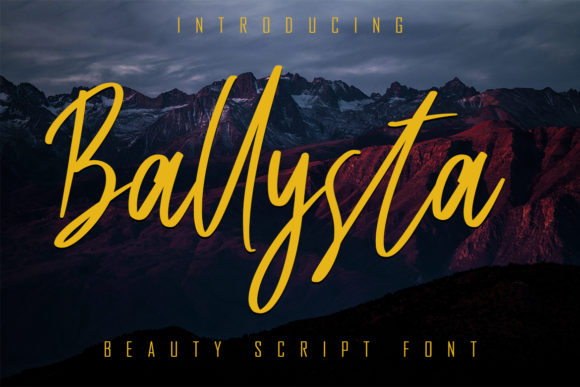
At its core, Ballysta is a handwritten font characterized by a relaxed, flowing rhythm that mimics natural penmanship. Unlike rigid cursive fonts that adhere too strictly to formal lettering rules, Ballysta embraces the organic variation found in real handwriting. The letterforms breathe. The connections between characters feel unforced. The overall impression is one of a personal note written by hand, even when it appears on screen or in print.
This font is notably PUA encoded, a detail that matters significantly to designers who regularly work with glyph panels and character maps. PUA encoding means all the alternate characters, ligatures, and decorative swashes are accessible without needing advanced OpenType-aware software. For a freelancer assembling a client's wedding suite or a small business owner creating branded quote cards, this accessibility removes friction and expands creative possibility. The swashes and alternates in Ballysta add flourishes that can elevate a simple word into a design feature — a capability that remains underutilized across much of the design community simply because many fonts bury these extras behind software barriers.
Natural Applications Across Design Niches
The practical uses of Ballysta span a broad spectrum of creative projects. This versatility is not accidental — it stems from the font's ability to carry emotional weight without sacrificing legibility. Common applications include:
- Wedding invitations and stationery — where the handwritten quality conveys intimacy, romance, and personal attention
- Thank you cards and greeting cards — adding a layer of sincerity that standard typefaces rarely achieve
- Quote graphics for social media — turning written wisdom into shareable, visually compelling content
- Logo design for lifestyle and wellness brands — establishing approachability and human connection from the first glance
- Business cards for creatives and solo entrepreneurs — signaling individuality in a pocket-sized format
- Product packaging for artisanal and handmade goods — reinforcing the crafted, non-mass-produced identity of the product itself
In each of these contexts, Ballysta does more than carry words — it sets an emotional tone. The font becomes part of the message, not just its container. This is a distinction that experienced designers understand instinctively and that newcomers to the craft quickly learn to value.
The Broader Shift Toward Human-Centered Design Language
To understand why Ballysta resonates so strongly right now, it helps to zoom out and observe the broader currents shaping visual culture. Over the past decade, we have witnessed a pendulum swing away from sterile minimalism toward forms of expression that feel more personal, textured, and emotionally present. This shift is evident in branding, where major companies have softened their visual identities, in user interface design, where micro-interactions and playful illustration have replaced cold functionality, and in social media content, where lo-fi, handmade aesthetics often outperform hyper-produced alternatives.
Typography sits at the center of this transformation. A typeface choice can single-handedly signal whether a brand belongs to the old guard of corporate formality or the new wave of relational, community-oriented business. Ballysta, with its relaxed strokes and approachable character, aligns naturally with the latter. It speaks the visual language of connection over transaction, of story over sales pitch.
Digital Fatigue and the Appeal of the Tangible
Another factor driving attention toward handwritten fonts like Ballysta is the growing sense of digital fatigue experienced by consumers and creators alike. When people spend hours each day scrolling through feeds filled with algorithmically optimized content, they develop a craving for things that feel real. Handwriting — even simulated handwriting — triggers a psychological association with human presence, effort, and care. It reminds us that a person, not a machine, originated the message.
For entrepreneurs and marketers, tapping into this psychological undercurrent can be remarkably effective. An email newsletter header set in a warm handwritten font, a product label that looks like it was penned in a studio rather than designed in a boardroom, a social media graphic that carries the intimacy of a handwritten letter — these small gestures accumulate into a brand perception that feels genuinely human. Ballysta provides the typographic vehicle for that strategy.
Changing Workflows and the Rise of the Multi-Disciplinary Creator
The modern creative landscape has dismantled many of the traditional boundaries between disciplines. A single individual today might design logos, craft social media content, build simple websites, and produce print materials — all within the same week. This convergence of roles has created a demand for design assets that are both high in quality and low in complexity. Fonts that require deep technical knowledge to unlock their full potential don't fit well into this fast-moving, multi-hat-wearing workflow.
Ballysta's PUA encoding addresses this directly. By making alternate characters and swashes accessible through a standard character map or glyph panel — even in basic design software — it meets the multi-disciplinary creator where they are. A social media manager with modest design training can still produce visually rich quote graphics. An entrepreneur designing their own packaging can achieve a premium, handcrafted look without outsourcing to a specialist typographer. This democratization of design capability is not a minor convenience; it is a structural change in who gets to participate in quality visual communication.
Speed Without Sacrifice
Workflow efficiency matters enormously in today's creative economy. Deadlines are tight, client expectations are high, and the volume of content required to maintain a brand presence across multiple platforms is staggering. Fonts that require extensive manual adjustment or that lack accessible alternate characters slow down production pipelines. Ballysta's flowing, pre-optimized connections and readily available swashes mean that a designer can apply meaningful typographic variety to a project in minutes rather than hours. The relaxed appearance of the font belies the efficiency it brings — a quality that professionals appreciate deeply.
Why People Are Paying Attention to Handwritten Typography Now
The rising interest in fonts like Ballysta cannot be separated from the larger economic and cultural context. Several converging factors have elevated handwritten typography from a niche preference to a mainstream priority:
- The creator economy has empowered millions of individuals to build personal brands, many of which rely on visual warmth and relatability to attract audiences
- E-commerce expansion has pushed packaging and product presentation to the forefront of customer experience, where tactile cues — even visual approximations of them — influence purchasing decisions
- The normalization of remote communication has made the written word a primary medium for connection, increasing the emotional value of type that feels personal
- The maturation of design tools has placed professional-grade capabilities in the hands of non-specialists, who often gravitate toward fonts that feel expressive and forgiving
In each of these domains, the choice of typeface is no longer just a design decision — it is a strategic one. Ballysta represents a conscious selection of warmth over coldness, of individuality over uniformity, and of approachability over distance. These values align closely with what contemporary audiences expect from the brands and creators they choose to engage with.
Practical Wisdom for Using Ballysta Effectively
While Ballysta brings considerable strengths to a design, its impact depends on how it is deployed. Experienced designers understand that handwritten fonts benefit from thoughtful context and restraint. A few guidelines emerge from observing successful applications across various media:
First, allow Ballysta room to breathe. Pairing it with generous whitespace lets the flowing letterforms stand out and preserves the sense of relaxation the font naturally communicates. Crowding it into dense layouts diminishes its charm.
Second, take advantage of the PUA-encoded alternates and swashes. The difference between a standard rendering and a customized one — where certain letter combinations use ligatures or where key words receive decorative swashes — can elevate a design from competent to memorable. These details signal care and intentionality.
Third, consider contrast. Ballysta's handwritten character shines brightest when set against a clean, simple sans-serif for supporting text. This pairing creates a visual hierarchy that guides the viewer's eye while reinforcing the personal quality of the highlighted text. The contrast between the organic and the structured is one of the most reliable techniques in a designer's repertoire.
Long-Term Relevance in a Shifting Landscape
Design trends come and go with predictable regularity, but the underlying human desire for connection, authenticity, and emotional resonance does not fade. Handwritten typography has persisted across centuries — from illuminated manuscripts to modern branding — precisely because it carries a trace of the human hand. Ballysta, as a contemporary expression of this tradition, is well-positioned to remain relevant even as specific visual trends evolve. Its relaxed, versatile character adapts to changing contexts without losing its essential identity.
For professionals, creators, and business owners who invest in visual assets with a long-term view, this durability matters. A font that can move fluidly from wedding stationery to brand identity to social media content represents not just a purchase but a lasting creative resource. In a marketplace that often encourages disposability, Ballysta offers something enduring.
Connecting Typography Choice to Business Outcomes
It can be tempting to think of font selection as a purely aesthetic exercise, but the reality for entrepreneurs and marketers is that typography directly influences perception and behavior. Studies in consumer psychology have demonstrated that typeface characteristics affect how readers interpret the tone, credibility, and personality of written content. A handwritten font like Ballysta tends to lower psychological barriers, making communications feel more personal and less transactional.
For a small business sending thank-you notes to customers, a freelance designer presenting a proposal, or a content creator sharing a reflective quote with their community, the emotional frame established by the typeface can be as important as the words themselves. Ballysta enables a tone that is warm without being saccharine, professional without being cold — a balance that many brands and individuals strive to achieve.
The font's flowing, relaxed nature also makes it suitable for longer text passages in certain contexts. A brief letter, a short poem, or a heartfelt message can be set entirely in Ballysta without causing the reader fatigue, provided the line spacing and size are appropriately generous. This expands its utility beyond headlines and accent text into more substantial narrative applications.
Looking Ahead with Grounded Optimism
The design industry will continue to evolve, shaped by technological advances, cultural shifts, and the ever-changing preferences of audiences. But the fundamental human response to handwriting — the recognition of effort, the perception of intimacy, the feeling of being addressed directly by another person — is unlikely to diminish. If anything, as digital experiences become more automated and artificial, the value of the human touch will increase.
Ballysta stands at this intersection of tradition and contemporary need. It offers a tool that honors the craft of handwriting while serving the practical demands of modern design workflows. Its PUA encoding reflects an understanding that accessibility should not come at the expense of sophistication. Its aesthetic captures a mood that many are seeking — one of calm, authenticity, and genuine connection.
For the professional designer refining a brand identity, the entrepreneur launching a product line, the content creator cultivating an engaged audience, or the couple designing their wedding invitations, Ballysta provides more than a typeface. It provides a means of expression that feels true to life — imperfect in the most beautiful sense, personal without pretense, and infinitely adaptable to the stories we choose to tell through design.