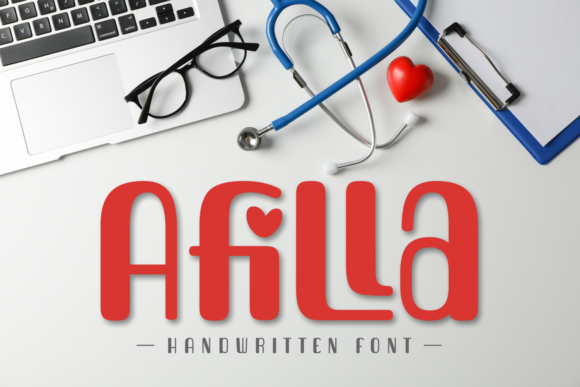
Afilla The Handwritten Font That Brings Warmth to Every Project
There is something undeniably magnetic about handwriting. Even in our screen-dominated world, the imperfect curve of a letter, the slight slant of a word, the natural flow of ink—these details carry an emotional weight that sterile typefaces simply cannot replicate. Afilla captures exactly that spirit. It is a cute and casual handwritten font with an incredibly friendly feel, designed to make every creative idea feel personal, approachable, and genuinely human.
What sets Afilla apart from the countless other script fonts flooding the market is its effortless charm. It never feels forced or overly stylized. Instead, it reads like the handwriting of someone you would want to grab coffee with—relaxed, warm, and full of character. That quality alone makes it a standout choice for designers, crafters, and content creators who want their work to connect on a more intimate level.
The Personality Behind the Letters
Fonts have personalities. Some are formal and reserved, others are bold and demanding. Afilla belongs to a category that feels like a conversation. Its letterforms are rounded and soft, with just enough irregularity to feel authentic without sacrificing readability. The strokes vary naturally, mimicking the pressure changes of a real pen on paper. This gives the font a rhythm that static, uniform typefaces simply cannot replicate.
When you use Afilla in a design, you are not just displaying words. You are communicating tone. You are telling the viewer that this message is friendly, that this brand is approachable, that this moment is genuine. That subtle psychological shift—from corporate to conversational, from distant to direct—can completely change how an audience receives your content.
Where Afilla Truly Shines
The versatility of Afilla is one of its strongest selling points. While many handwritten fonts pigeonhole themselves into narrow use cases, this one adapts beautifully across a wide range of applications. Here are some of the most popular scenarios where designers and creators are putting it to work.
Instagram and Social Media Graphics
Scroll through any popular lifestyle or creative Instagram account and you will notice a pattern. The most engaging posts often feature typography that feels personal and unpolished—exactly what Afilla delivers. Whether you are designing quote cards, story templates, or promotional posts, this font adds a layer of warmth that polished sans-serifs cannot achieve. In a feed full of perfection, a handwritten touch stands out precisely because it feels real.
Creators looking for fonts for Instagram consistently gravitate toward options that feel shareable and emotionally resonant. Afilla meets that need perfectly. It pairs well with photography, illustrated backgrounds, and minimalist layouts alike, making it a flexible asset for anyone managing a consistent visual brand.
DIY and Handmade Projects
The DIY community has long understood the power of typography in elevating handmade goods. From greeting cards to party invitations, from scrapbook layouts to custom labels on homemade candles, the right font transforms a simple craft into something that feels professionally designed. Afilla brings a sense of handcrafted authenticity that aligns perfectly with the values of the maker movement.
Because the font already mimics natural handwriting, it blends seamlessly into projects that might otherwise require actual calligraphy skills. Not everyone has the time or dexterity to learn brush lettering, and that is precisely why Afilla exists. It democratizes the handwritten aesthetic, making it accessible to anyone with a computer and a creative impulse.
Calligraphy Scripts and Event Stationery
Wedding invitations, baby shower announcements, milestone birthday cards—these are moments that deserve more than a default typeface. Calligraphy scripts carry a sense of occasion, and Afilla delivers that feeling without the formality that can sometimes make traditional calligraphy feel stiff. It strikes a balance between celebratory and casual, which is ideal for modern events that prioritize warmth over rigid etiquette.
Event designers and stationery creators often keep a library of go-to fonts for different client personalities. Afilla earns its place in that library by covering the sweet spot between playful and polished. It suggests care and intentionality without ever looking like the designer tried too hard.
The Practical Side of Using a Handwritten Font
Beyond aesthetics, anyone who works with fonts regularly knows that practical considerations matter just as much as visual appeal. Legibility across different sizes, character support, file formats, and licensing all play into whether a font becomes a daily workhorse or a one-time download that gets buried in a crowded font folder.
Afilla scores well on these practical fronts. Its letter spacing is generous enough to remain readable at smaller sizes, which is crucial for applications like social media captions or website subheadings. At larger display sizes, the personality of each character comes through without overwhelming the reader. This scalability makes it a reliable choice for everything from tiny price tags to oversized wall art.
The font also handles common punctuation and numerals gracefully, which is not always guaranteed with casual handwritten designs. Having access to a full character set means fewer workarounds and more seamless design workflows.
Pairing Afilla with Other Typefaces
Even the most beautiful handwritten font rarely works in isolation on a complete design. Understanding how to pair Afilla with complementary typefaces unlocks its full potential. The rule of thumb with casual scripts is to contrast them with something cleaner and more structured. A simple sans-serif like an open grotesque or a gentle geometric font provides a stable anchor that lets the handwritten elements sing.
Consider a brand board that uses Afilla for headlines and accent phrases, paired with a readable sans-serif for body copy. The combination feels curated and professional without losing the approachability that the handwritten font brings. Designers who master this pairing technique find that Afilla becomes a go-to asset across branding projects, packaging designs, and digital content alike.
Emotional Design and the Human Connection
There is a growing body of thought in design circles around the concept of emotional design—the idea that how something looks and feels directly influences how people respond to it. Fonts are a critical piece of that puzzle. A handwritten font like Afilla triggers associations with personal notes, childhood journals, and heartfelt letters. Those associations are powerful. They bypass the analytical brain and tap directly into feelings of nostalgia, comfort, and trust.
Brands that understand this leverage handwritten typography to humanize their communications. A coffee shop that uses Afilla on its menu boards signals warmth and community. A children's clothing brand that adopts it for packaging feels nurturing and playful. A wellness coach who uses it in social graphics comes across as supportive rather than clinical. The font becomes a strategic tool, not just a decorative choice.
Common Considerations Before Choosing Afilla
No font is perfect for every situation, and making an informed decision means weighing a few key factors. Here are some practical points to consider before integrating Afilla into a project.
- Readability at extreme sizes. While Afilla performs well across a range, testing it at the smallest and largest sizes your project requires is always wise. Handwritten fonts can lose clarity at very small point sizes or become distractingly exaggerated at massive scales.
- Project tone and audience expectations. If a client or project demands a highly formal, corporate tone, a casual handwritten font might undercut that message. Matching the font personality to the communication goal is essential.
- Licensing for commercial use. Always verify that the font license covers your intended application, whether that involves printed merchandise, digital products, or client work. Respecting licensing protects both the creator and the end user.
- File compatibility. Confirm that the font file format works with your design software of choice, whether you are using Adobe products, web-based tools like Canva, or other creative platforms.
- Glyph support for multilingual projects. If your content spans multiple languages, check that Afilla includes the necessary accents and special characters to avoid awkward gaps in the text.
Integrating Afilla Into a Modern Creative Workflow
Today's creative workflows are fast, collaborative, and often span multiple platforms. A font that slows down that process or creates compatibility headaches quickly becomes more trouble than it is worth. Fortunately, Afilla integrates smoothly into the modern designer's toolkit. It works well in both raster and vector environments, which means it transitions cleanly between photo editing software, layout applications, and even simple browser-based design tools.
For social media managers who batch-create content weeks in advance, having a reliable handwritten font in the rotation saves enormous time. Instead of handwriting quotes or titles by hand for every graphic—or worse, using the same default cursive font that everyone else uses—Afilla provides a distinctive yet consistent look that builds visual recognition over time. Audiences begin to associate that friendly lettering with the brand, which is precisely the kind of subtle branding win that compounds over months and years.
Crafters who sell printable products on platforms like Etsy also benefit from the ease of embedding Afilla into their designs. A single well-chosen font can elevate an entire product line, from wedding signs to nursery wall art, giving a cohesive look without the labor of hand-lettering every item individually.
The Enduring Appeal of the Handwritten Aesthetic
Trends in typography come and go, but the demand for fonts that feel personal has never really faded. If anything, the more digital our lives become, the more we crave tactile, human touches in the visual media we consume. Afilla sits at the intersection of this cultural shift. It meets a need that transcends any single design trend—the need for communication that feels like it came from a person, not a corporation.
This enduring appeal means that investing time in learning how to use Afilla effectively is not a short-term play. It is a skill that will serve designers, marketers, and creators for years to come. Whether you are designing fonts for Instagram posts or building a full brand identity around a handmade product line, the ability to deploy a casual, inviting handwritten font with confidence is a genuine creative asset.
In a world saturated with content, the smallest details determine whether someone stops scrolling long enough to engage. Typography is one of those details. And when the goal is to create work that feels less like content and more like a message from a friend, Afilla is exactly the tool that makes that possible. Its cute, casual, and incredibly friendly character turns every creative idea into a true piece of art—one letter at a time.